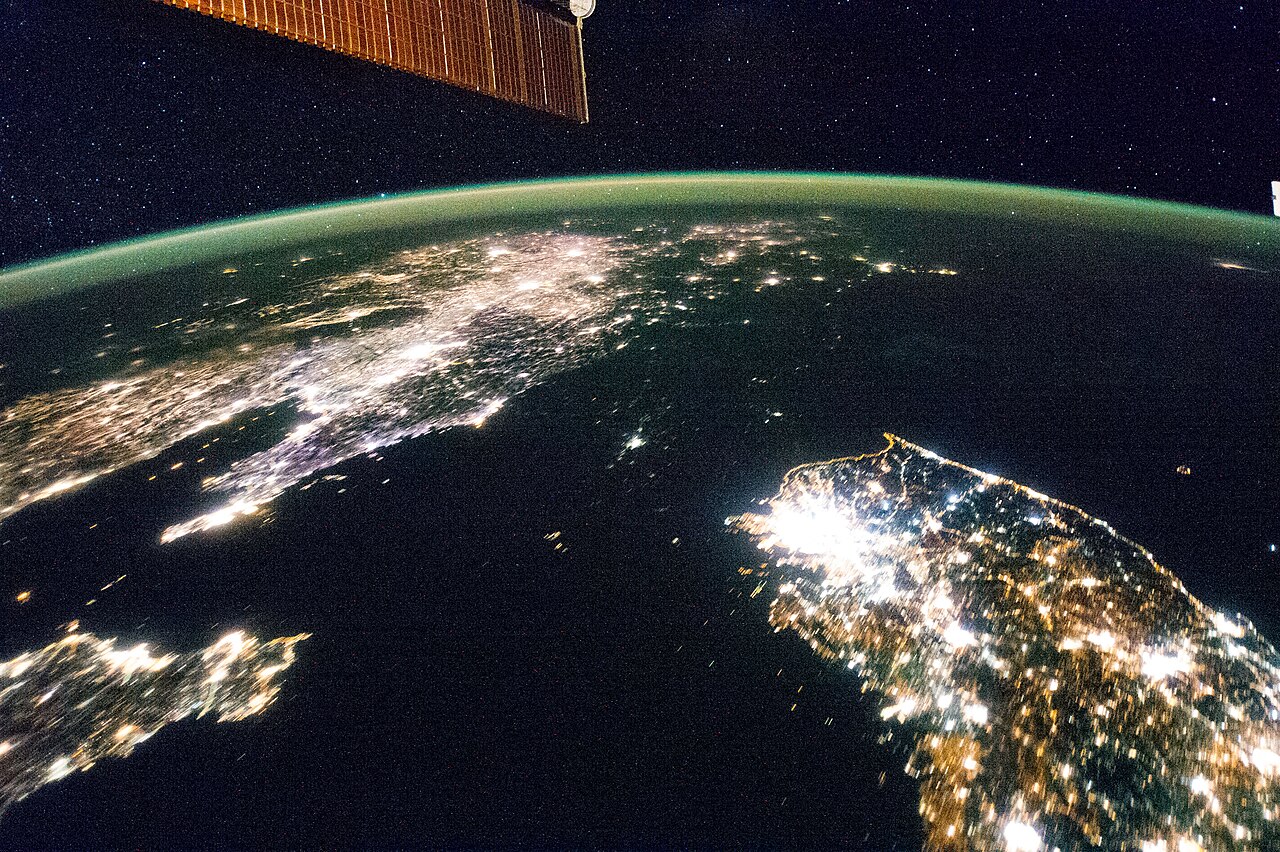
Electricity
Power
Mostly rivers and coal - and not much of either.
819 kWh
Electricity per person a year
2008 - below the level of 1970, and down from a 1,247 kWh peak in 1990. Source
Electricity by source, 2021: hydro 16.1 TWh, thermal 9.4 TWh. Statistics Korea via 38 North. Hydro falls in dry years and freezing winters - so do the lights.
Fuel
Oil and sanctions
North Korea has no oil of its own. The UN limits how much it can buy - and the limit is being broken.
165,000+
Barrels from Russia in one month
March 2024 alone, says the White House - on course to smash the cap. Source
Where it comes from
Biggest power stations
Installed capacity. Actual output is usually far lower because of old equipment and fuel shortages.
| Station | Type | Capacity | Notes |
|---|---|---|---|
| Pukchang Thermal Power Complex | Coal | 1,600 MW | The country's biggest power station, north of Pyongyang. |
| Taechon Hydroelectric Power Station | Hydro | 746 MW | Chain of dams in North Pyongan. |
| Sup'ung Dam | Hydro | 630 MW | Built by Japan in the 1940s on the Yalu - power is shared with China. |
| Unbong Dam | Hydro | 430 MW | Another shared dam on the Yalu River. |
| Yongbyon light-water reactor | Nuclear | 20 MW | Experimental reactor beside the weapons complex; probably still in testing. |
| Haeju Solar Power Station | Solar | 10 MW | One of the biggest solar farms - tiny next to the coal and hydro plants. |
| KEDO reactors (abandoned) | Nuclear | 2,000 MW | Two power reactors the US and allies began building in the 1990s, scrapped in 2006. |
Source: Energy in North Korea.
More inside North Korea
Who runs it, the military, the economy and how people live.